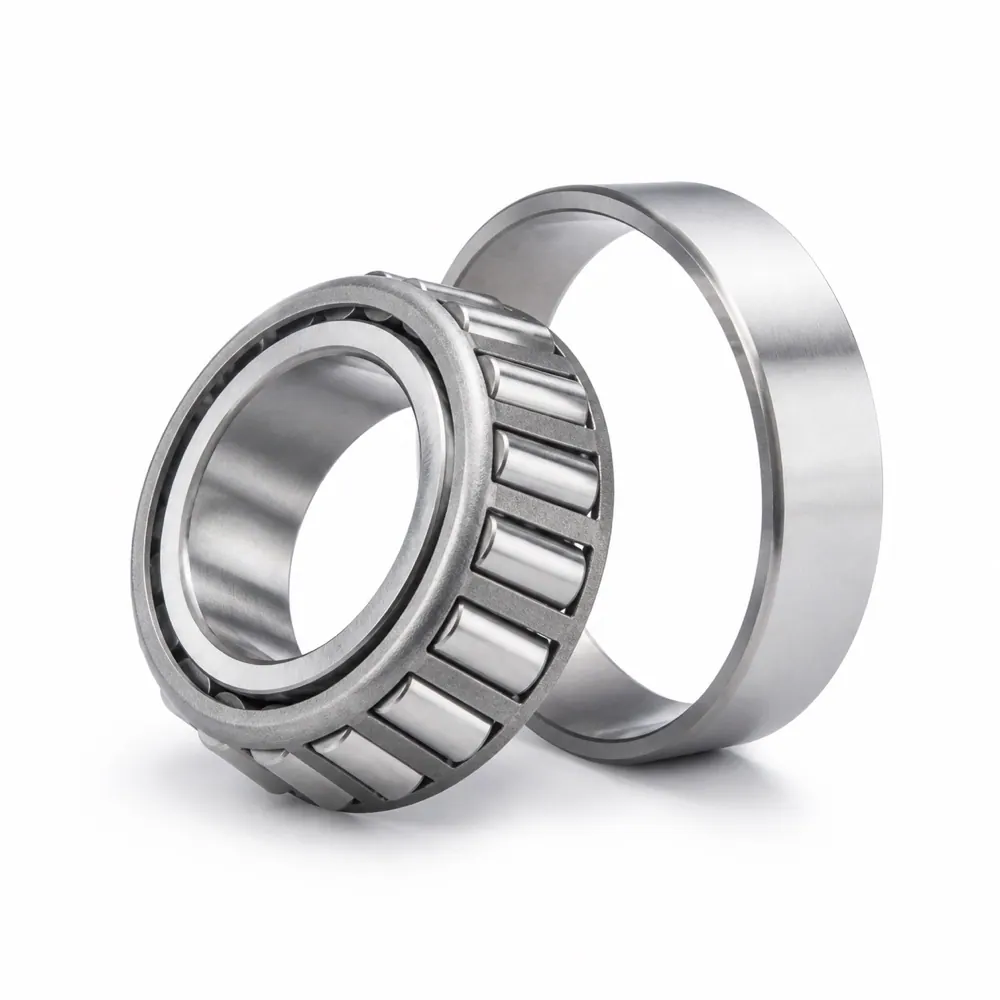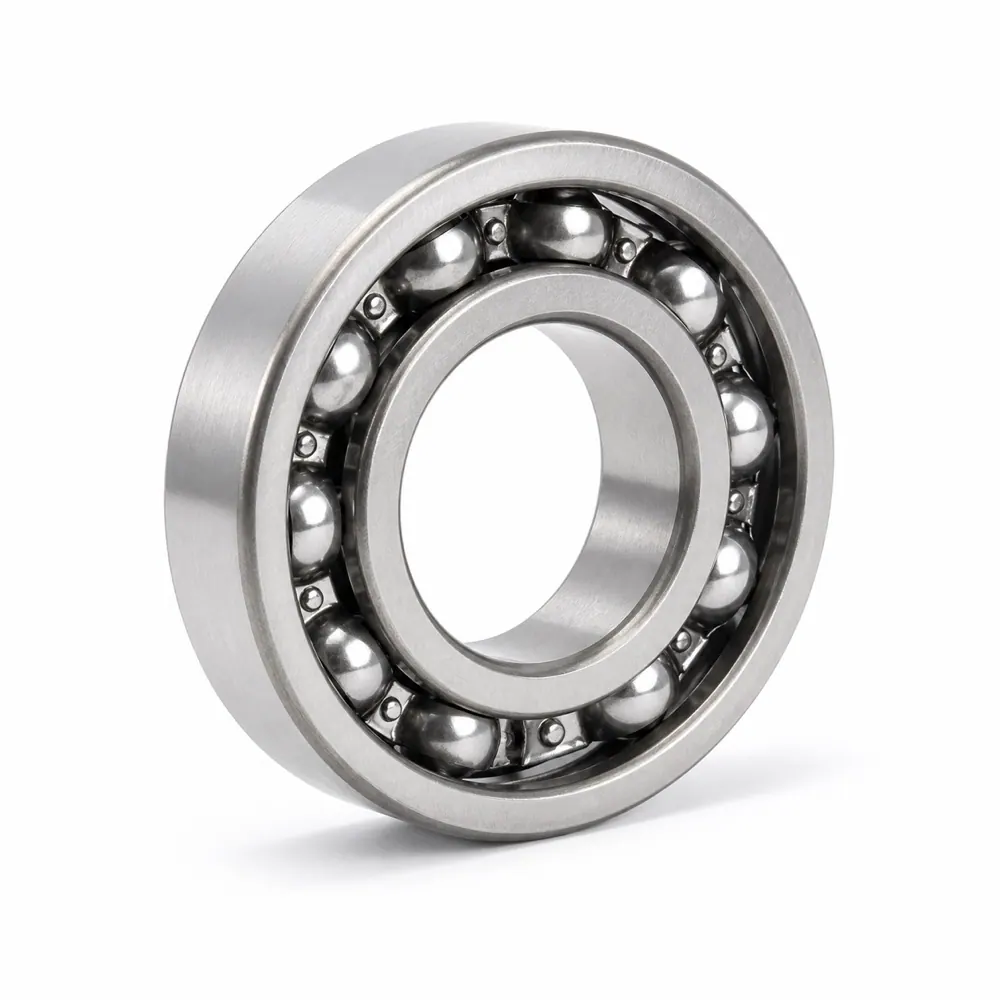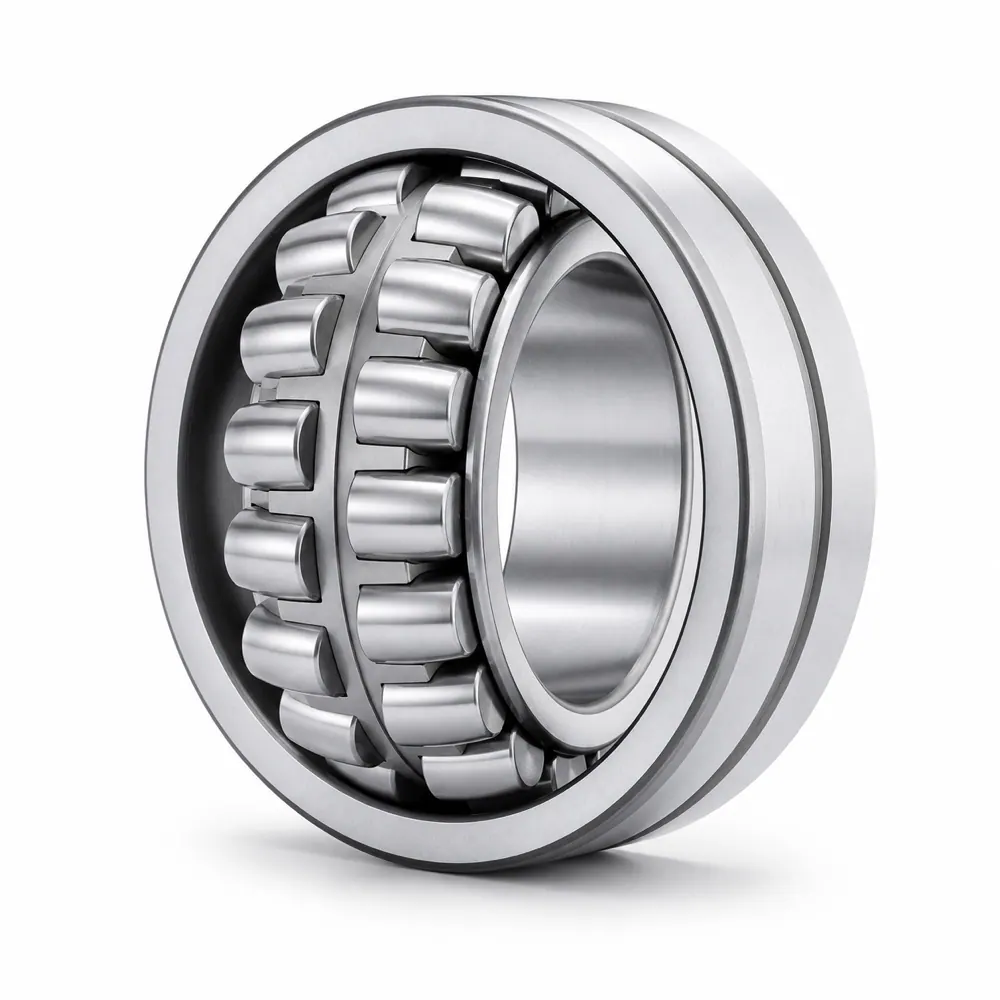
Two offers for the same spherical roller bearing base model can describe different products and different installation responsibilities. One may specify a cylindrical bore and normal clearance; another may include a tapered bore, a sleeve or increased clearance. The purchasing problem is not solved by matching three boundary dimensions. This guide explains how buyers can define spherical roller bearing clearance, separate incoming inspection from mounting acceptance and request the evidence needed for a defensible comparison. It is a procurement framework, not an installation procedure or a release of Mainland performance data.
Key takeaways
- Specify the clearance class separately from precision, bore execution, cage and lubrication features.
- Initial clearance, clearance reduction during mounting and residual clearance are different acceptance quantities.
- A tapered bore and its sleeve must match the complete approved arrangement; a base model is not a shaft-size instruction.
- Request a traceable measurement record and an approved mounting method instead of copying another manufacturer's numerical table.
1. Identify what the clearance statement actually describes
NSK distinguishes initial clearance before mounting, residual clearance after mounting and effective clearance during operation. Tight fits and ring temperature differences can change the available internal clearance. These are related conditions, but they are not interchangeable labels for one inspection result. A report should name the condition being checked instead of presenting an unexplained clearance number.
For a purchasing specification, create separate fields for the supplied bearing's clearance class and the installed assembly's acceptance requirement. Identify who owns each field. The bearing supplier may document the supplied execution, while an equipment designer or assembler approves the mounted condition. Ask both parties to confirm the boundary rather than assuming that a carton marking certifies the finished machine.
A useful review question is: what exactly would this document allow us to accept or reject? An incoming clearance-class statement cannot, by itself, approve an installed assembly. Conversely, a successful assembly check does not identify every production bearing in an unopened shipment. Keep the two records connected by model and batch identification, but retain their separate purposes.
2. Compare CN and C3 without treating them as quality grades
CN denotes the normal internal-clearance group, while C3 denotes a larger-than-normal group for the relevant bearing definition. Neither label is a precision grade or a promise of better service life. NSK's clearance guidance discusses fits and operating conditions when selecting the group. It does not make an industry name, such as mining, a sufficient selection rule.
Do not request C3 merely because a distributor calls it heavy duty, or downgrade an approved C3 requirement because CN is available sooner. Ask engineering whether the quoted class matches the approved arrangement. If the requirement is missing, record it as unresolved. A cheaper offer with an unapproved clearance change is an alternative proposal, not a like-for-like price comparison.
Ask the supplier to identify the applicable clearance specification and its scope for the exact type and size. Keep tolerance class, cage, bore execution and lubrication features in separate columns on the comparison sheet. This makes it easier to see whether two suppliers disagree about clearance or are actually describing different internal designs. Never infer a numerical Mainland clearance range from another brand's catalogue.
3. Resolve cylindrical bore, tapered bore and shaft size first
NSK's mounting guidance describes tapered-bore bearings on tapered seats, or on cylindrical shafts using appropriate sleeves. This is not the same arrangement as a cylindrical-bore bearing fitted directly to a cylindrical shaft. Before asking about clearance reduction, identify which arrangement the equipment drawing actually requires and obtain the full supplied designation.
For a sleeve-mounted assembly, distinguish the bearing's nominal bore from the sleeve's shaft-side diameter. Do not copy one into the other field on a purchase order. Ask for the bearing, sleeve, nut and locking-part designations together, plus a drawing showing their relationship. A package containing a bearing and an unspecified adapter is not yet a controlled mounting kit.
Suffixes must be interpreted using the offered manufacturer's definition. Request written confirmation of cylindrical or tapered bore, the applicable taper when relevant, clearance group, cage and lubrication features. Do not silently add a familiar suffix to a Mainland base model and treat it as an approved order code. Confirm supply availability and complete syntax with the quotation.
- Identify bearing position, full designation, drawing revision and actual shaft arrangement.
- Record bearing bore and shaft diameter separately when a sleeve is involved.
- List all included mounting components and any parts that remain the buyer's responsibility.
- Flag unknown suffix meanings or unavailable drawings before approving an interchange.
4. Separate the mounting method from its acceptance limits
SKF's Bearing Installation and Maintenance Guide describes radial clearance reduction, angular drive-up and hydraulic drive-up approaches for tapered-bore spherical roller bearings. The important purchasing distinction is that a method has defined applicability, tools and reference conditions. Its name alone does not establish the numerical instruction for a different bearing or mounting arrangement.
Ask the technical owner to identify the approved method and its document revision. Request confirmation that it applies to the offered bearing execution, seat or sleeve and available installation access. A method that cannot be executed or verified with the site's tools is a project issue to resolve before shipment, not a reason to improvise a tightening instruction during installation.
Keep the method's required starting condition, measured quantities and acceptance limits in the same approval package. Do not combine a starting rule from one manufacturer's method with an endpoint from another. For hollow shafts, unusual seats or other conditions outside a referenced procedure, request application-specific review. This article supplies no universal nut angle, torque, drive-up distance or clearance-reduction value.
5. Keep initial value, reduction and residual value distinct
NSK describes checking radial clearance reduction when mounting tapered-bore spherical roller bearings. Its instructions also address residual clearance. A reduction describes a change between defined conditions; a residual value describes what remains in the specified mounted condition. Writing only clearance checked on an inspection sheet does not tell a reviewer which requirement was evaluated.
An illustrative document review shows the practical difference. A supplier offers a certificate identifying the incoming clearance class, while an assembler offers a sheet saying installation passed. Neither document necessarily records the actual starting measurement, the approved reduction criterion or the final residual result. The buyer should request those missing fields where required by the approved procedure, rather than assuming the two documents complete each other.
Do not calculate a component's actual reduction using a catalogue group's endpoint as though it were an individual measurement. Ask how the relevant starting value was obtained and which condition it represents. Keep each result with its units, instrument identification and acceptance reference. If the records cannot be reconciled, place the assembly decision with the responsible engineer, not the purchasing spreadsheet.
6. Specify a measurement record that can be reviewed
NSK's spherical roller handling manual explains that measurement position and bearing size affect the checking method, and that measurement equipment and components need an appropriate temperature condition. Its mounting guidance also addresses readings for both roller rows. These details matter when assessing evidence; a single photograph of a feeler gauge is not a complete measurement record.
Request the approved procedure's required observations, not a self-designed shop-floor sequence. The record should identify the bearing and associated parts, instrument, support or fixture condition, measurement state and actual results. Specify the required units and document revision. Where the procedure requires more than one location or row, retain the necessary individual readings rather than only an unlabeled final total.
Define how the final acceptance state is documented after the relevant assembly operations. Heating, mounting tools and locking steps can make a reading taken earlier unsuitable as the final record; follow the applicable procedure's rechecking requirements. If a sample report contains more decimal places than the method can reliably resolve, ask the quality owner to assess capability instead of mistaking display resolution for evidence.
- Bearing and sleeve identification, batch reference and assembly drawing revision.
- Approved measuring procedure, instrument identification and stated units.
- Specified temperature, support and assembly conditions, with required row or location readings.
- Applicable acceptance limits, actual results, final checking state and approval owner.
7. Build a supplier decision sheet with real stop points
A useful comparison sheet has three possible statuses for every technical line: confirmed to the requirement, proposed deviation or awaiting information. Avoid reducing these to a single compliant checkbox. An offer can match the boundary dimensions while leaving the bore execution, sleeve scope or clearance definition unresolved. That distinction should remain visible when price and delivery are reviewed.
If the supplied clearance class differs from the approved requirement, request written engineering acceptance before treating the offer as equivalent. If the sleeve is unidentified, ask for its designation and drawing. If a numerical report lacks the method or units, return it for clarification. These are practical stop points that prevent purchasing approval from being mistaken for installation approval.
Keep commercial confirmation moving in parallel where possible. Ask suppliers to separate unit price, included mounting parts, inspection documents, packing, MOQ, sample terms and production lead time. State which technical questions remain open and what event releases the order. This lets buyers compare a documented scope without claiming that the lowest complete-looking offer has already passed application validation.
8. Plan sample acceptance and investigate problems without guessing
Use a sample plan to test the proposed specification, not to create a retrospective explanation for any result. Before delivery, assign responsibility for identity checks, mounting records and controlled equipment evaluation. Define the approved operating conditions, observations and decision authority. Keep the supplied sample configuration linked to the report so that a later production change cannot disappear behind the same base model.
Unexpected heat, noise or vibration should trigger a structured review, not an automatic move to C3 or C4. Preserve the observed symptoms, operating conditions, lubrication details and mounting evidence. Ask the responsible team to distinguish a wrong supplied execution, a fit or assembly issue, a measurement problem and an application change. Several explanations may remain possible until the evidence is examined.
Do not alter a safety-critical assembly or continue an abnormal running test using this purchasing guide as authority. Apply the equipment's approved stop and inspection procedures. For routine supplier discussions, an evidence package with dated records and identified components is more useful than a general complaint that the bearing is tight. It also helps prevent an unnecessary change to a previously correct clearance requirement.
9. Make distributor stocking and replacement orders unambiguous
Distributors should keep separate stock identities for executions that differ in clearance, bore or other approved features. Do not merge them into a generic spherical roller item simply because their external dimensions match. Confirm what is printed on the bearing, carton and transaction record, and how an accepted substitute will be distinguished from the originally ordered product.
For repeat orders, reference the approved configuration and document revisions rather than repeating only the shortest model code. Require proposed changes to be identified before shipment. A supplier may suggest an alternative sleeve, cage or clearance group, but procurement needs a clear approval path and a way to identify affected stock. Availability is useful information; it is not technical equivalence.
When replacing an old bearing, photograph all readable markings and gather the equipment drawing, sleeve identity and maintenance history. Separate measured facts from guesses about worn or damaged parts. Tell the supplier which details are unknown. A replacement review should resolve the supplied execution and mounting requirement together, while leaving the equipment designer responsible for application approval.
10. Send Mainland a clearance-aware RFQ
Start with the appropriate Mainland model page and provide the complete requirement to Oliver Peng. A request for the 22212 base model can establish an initial discussion, but does not confirm a tapered-bore execution, sleeve, clearance class or installation instruction. State the quantity, application, destination and available drawings, then list the specific technical confirmations needed for quotation.
An illustrative request could read: Please quote the spherical roller bearing execution required by our attached assembly drawing. Confirm the bore type, clearance specification, cage and lubrication features, and identify any mounting parts included. Our engineering team will approve the mounting method and acceptance limits. Please identify available inspection documentation and all deviations or unresolved requirements. Confirm sample terms, MOQ, export packing and lead time for the stated quantity. If a requirement cannot be confirmed, show it as pending rather than substituting an assumption.
The manufacturer references below explain general concepts and their own procedures; they do not certify Mainland products. No load ratings, speed limits, weights, numerical clearance ranges or mounting settings are released by this guide. The objective is a technically consistent offer with clear approval responsibilities, so that buyers can compare suppliers without turning another brand's installation table into an unsupported Mainland specification.
Frequently asked questions
Is C3 always better than CN for a spherical roller bearing?
No. C3 is an increased internal-clearance group, not a higher quality grade. The approved choice depends on the bearing execution and equipment conditions. Do not replace CN with C3, or C3 with CN, without the relevant engineering approval.
Does a tapered-bore bearing have the same bore as the sleeve's shaft diameter?
Do not assume so. The bearing and sleeve form a defined arrangement, with a bearing-side interface and a shaft-side diameter. Request the complete bearing and sleeve designations plus an assembly drawing, and keep both dimensions separately identified on the order.
Can I use a clearance-reduction table from another bearing brand?
Do not use it as automatic acceptance data for a Mainland bearing. Confirm the exact execution, applicable procedure, starting condition and approved limits with the technical owner. A reference table is not a substitute for released instructions for the offered product and arrangement.
Is measuring clearance before mounting enough to accept the installed assembly?
No. Incoming bearing identity and clearance evidence serve a different purpose from mounted-assembly acceptance. Obtain the measurements and final-state checks required by the approved mounting procedure, and retain their connection to the supplied bearing and associated parts.
What if the purchase drawing does not specify clearance?
Flag the requirement as unresolved and ask the equipment designer or responsible engineer to define it. Provide the full markings, arrangement, fits and operating information available. Request a documented proposal rather than choosing a clearance class solely from the industry or delivery deadline.
Technical references
This guide uses recognized references as a technical framework. Final requirements must be confirmed for the specific bearing and application.
- NSK: Bearing ABCs, Fits and Internal Clearance, definitions and clearance classes ↗
- NSK: Mounting, tapered-bore arrangements and spherical roller clearance checks ↗
- NSK: E9003 Handling Instructions for Spherical Roller Bearings, measurement and mounting controls ↗
- SKF: Bearing Installation and Maintenance Guide, mounting tapered-bore spherical roller bearings ↗