An industrial buyer comparing 6204-2RS, 6204-ZZ and an open 6204 is not simply choosing three prices for the same product. The closure is part of a specification that also includes lubrication, operating conditions and acceptance requirements. This guide explains the questions to ask before approving a sealed, shielded or open deep groove ball bearing, then turns those questions into a usable procurement and sample-review process.
Key takeaways
- Choose a closure against the complete operating environment, not the suffix or purchase price alone.
- A metal shield, a non-contact seal and a contact seal are different constructions; request a written definition.
- Confirm grease, operating conditions and acceptance criteria before approving an alternative bearing.
- Treat matching dimensions as a starting point, not evidence of identical performance or service suitability.
1. Define the problem before comparing closures
Begin with what the machine actually needs to prevent. Is the concern dust reaching the rolling contacts, lubricant leaving the bearing, moisture during cleaning, or excessive resistance at startup? These are different problems. A quotation that only says sealed bearing leaves the supplier to interpret both the problem and the proposed solution. Record the operating requirement before requesting a preferred suffix.
Describe the location as well as the surrounding industry. A motor inside a protected enclosure and a conveyor bearing close to a wet cleaning zone may need different reviews, even in the same facility. Ask maintenance staff how the failed unit was positioned, when the symptoms appeared and whether operating or cleaning conditions changed. Distinguish observations from assumptions in the RFQ.
Use the manufacturer references below to understand construction choices, not as Mainland product certification or test evidence. The sample workflows in this article are illustrative purchasing methods, not accounts of customer projects. Final suitability, commercial availability and numerical performance data require confirmation for the exact quoted configuration.
2. What open, ZZ and 2RS usually describe
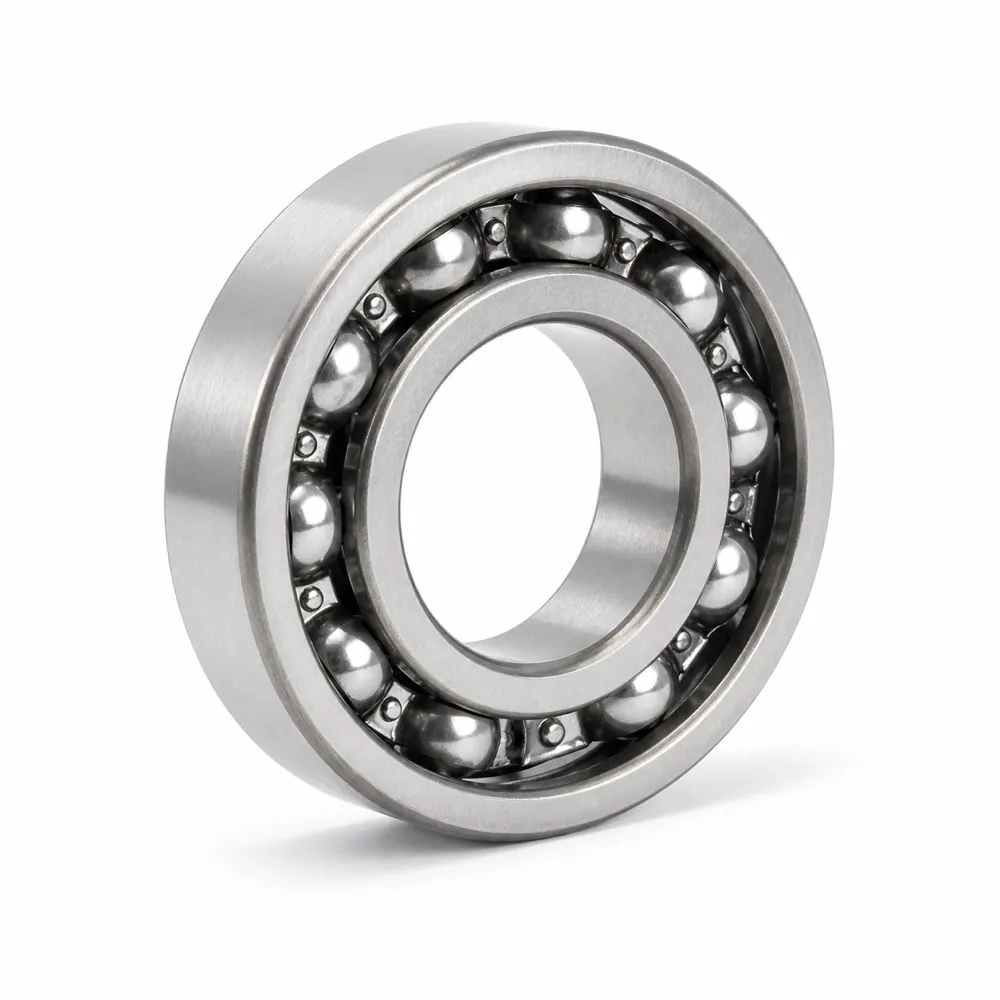
Open describes a bearing without integral side closures. ZZ or 2Z commonly identifies metal shields on both sides. Conventional shields form a small non-contact gap rather than a rubbing lip. 2RS commonly signals seals on both sides, often elastomer-based, but the actual contact geometry must be identified. Do not use the visible color of a seal as a technical specification.
NSK distinguishes its ZZ shields from sealed variants such as VV and DDU. Schaeffler and SKF use their own additional designations and constructions. These examples demonstrate why a short suffix is not a universal interchange standard. A non-contact elastomer seal, a light-contact design and a conventional contact seal should not be placed in one undifferentiated rubber-sealed category.
Ask the quoting supplier to state whether the closure contacts the inner ring, the closure material and whether one or both sides are covered. Keep the supplier's complete designation on the comparison sheet. If an alternative code is offered, require a plain-language description of the proposed difference before comparing prices or approving artwork.
3. When an open bearing belongs in the discussion
An open bearing should be considered as part of a protected, lubricated arrangement, not as an unprotected substitute for a sealed product. Inspect the housing drawing and identify how lubricant reaches the bearing and how contamination is controlled elsewhere. If those responsibilities are unclear, the quotation review is incomplete regardless of how attractive the unit price appears.
A practical RFQ question is: who controls lubrication after installation? The machine builder, maintenance department and bearing supplier may each assume someone else provides it. State whether the order needs an unlubricated construction, an agreed initial lubricant or integration with an existing lubrication system. Do not infer the answer from the absence of a seal suffix.
For a replacement, preserve the equipment's approved arrangement until a change is reviewed. Ask for photographs of the housing and lubrication connections rather than just the loose bearing. A purchasing team should not authorize removing closures to imitate an open bearing; that changes the supplied construction and makes traceable sample approval harder.
4. When a shielded ZZ bearing may be a candidate
SKF's motor engineering guidance describes shields as non-contact sheet-metal closures used where contamination is relatively low and grease retention is needed. This is a useful starting point for discussion, not permission to classify every indoor application as clean. Assess what can reach the bearing through the housing during operation, shutdown, handling and cleaning.
For a protected fan or motor, ask the engineering team whether avoiding additional seal-contact resistance matters and what external protection already exists. Request the actual grease specification and operating limit for the offered shielded execution. A generic catalogue speed for an open bearing does not answer whether the quoted assembly is suitable for the machine.
Check how shields will be handled during assembly and incoming inspection. Write down who is allowed to open packaging, which visual checks are required and whether any destructive inspection is permitted. If inspection removes a closure, keep that sample separate from production approval and do not return it to normal assembly stock without a controlled disposition.
5. When a sealed 2RS bearing needs closer review
A contact seal can trade additional rubbing resistance for contaminant exclusion and lubricant retention. SKF's sealing literature also distinguishes non-contact and low-friction alternatives, so the trade-off depends on geometry rather than simply metal versus rubber. Obtain the construction definition first, then ask whether the operating duty makes that trade-off acceptable.
Water exposure deserves a separate specification. Splash, condensation, immersion and a directed cleaning jet are not interchangeable conditions. SKF's published work on specialized seal designs illustrates that cleaning resistance is design-specific; it does not establish a waterproof rating for a generic 2RS bearing. Identify the cleaning method and request application evidence instead of writing waterproof on the purchase order.
For abrasive dust or repeated wet cleaning, ask the equipment engineer to review the complete protection system, including the housing and external seals. Record how the proposed bearing will be evaluated in that arrangement. The buyer's acceptance document should identify the actual exposure being assessed and the agreed evidence needed, rather than relying on a supplier's broad heavy-duty claim.
6. Specify grease and clearance separately
Schaeffler's lubrication guidance explains why grease amount and distribution matter and why excessive lubricant can contribute to heating. Do not request maximum grease as a quality upgrade. Ask for the proposed lubricant, fill specification and the supplier's basis for selecting them; obtain compatibility review when the assembly also contains other lubricants or polymer components.
Pre-greased does not mean unlimited service life. Ask what maintenance assumptions apply, whether replenishment is intended and how storage conditions are controlled before assembly. A distributor can place these answers on the carton specification and product record so that downstream buyers do not have to guess what a maintenance-free marketing phrase means for their equipment.
Keep radial clearance, precision class and closure in separate RFQ fields. C3 is a clearance designation, not a higher precision grade or a default instruction for all sealed bearings. Where the approved equipment specification is missing, request an engineering review rather than choosing a familiar suffix. This guide does not supply clearance ranges or speed limits for Mainland products.
7. Compare alternatives with a decision record
Create a one-page decision record for the exact bearing position. List the current approved designation, reason for considering a change, operating conditions, proposed construction and unresolved questions. Give each unresolved item an owner. This stops a purchasing discussion from turning into an informal engineering change that nobody later remembers authorizing.
Consider three illustrative reviews. A protected motor prompts questions about grease, noise requirements and startup resistance. A dusty conveyor prompts questions about particle exposure and housing protection. A periodically cleaned agricultural assembly prompts questions about water, cleaning chemicals and storage after use. None of these examples selects a closure automatically; each identifies what must be confirmed before selection.
Compare suppliers against the same completed record. A cheaper offer may exclude a requested lubricant, sample check or packing requirement, while a more expensive offer may include unnecessary options. Separate confirmed scope from proposed scope, and do not describe two quotations as equivalent until the technical differences have been accepted in writing.
- Current model and full suffix, with any incomplete marking identified.
- Contamination and cleaning exposure at the actual bearing position.
- Operating duty, temperature information and lubrication responsibility.
- Proposed closure construction and documented changes from the current specification.
- Named approval owner, remaining questions and sample acceptance plan.
8. Prepare an RFQ suppliers can answer consistently
A useful order description combines the base model with written configuration fields. For example, 6204 with both-side contact seals, agreed grease and approved clearance is a discussion baseline, not a complete released order code. Ask the supplier to return its full designation and configuration sheet. Confirm boundary dimensions from the drawing rather than assuming every suffix preserves all installation details.
Add the sample quantity, production quantity, forecast, destination and requested packing. Require the quotation to distinguish what is confirmed, what is available by agreement and what still requires technical approval. This is particularly important for distributors selling several variants under similar stock descriptions; a generic bearing photograph should not substitute for a controlled stock record.
Keep delivery assumptions explicit. Request the proposed schedule after specification and sample approval, then identify whether artwork, inspection documents or packaging approval affects it. Mainland's model pages provide an RFQ baseline; final closure, lubricant, MOQ and lead time are confirmed with the quotation. Do not treat this article as an offer of a particular configuration from stock.
- Model, dimensions, quantity, application and delivery destination.
- Closure on each side, contact type and material to be confirmed.
- Approved clearance and precision requirement, recorded separately.
- Lubricant and filling requirements, or a request for a documented proposal.
- Sample approval, inspection records, marking and export packing scope.
9. Approve samples with measurable criteria
Agree the sample plan before samples are ordered. Identify the measurement method, equipment, test arrangement and pass/fail limits for each required item. Where limits have not been established, record that gap instead of allowing a subjective smooth-running judgment to become the acceptance standard. Hand rotation can support a visual review but is not proof of operating suitability.
Link the sample's marking, carton label and supplier configuration sheet. Review dimensions, closure condition and the agreed functional evidence; assess the sample in the intended assembly when the application requires it. Keep photographs and inspection records tied to the sample identifier. Ask who authorizes a deviation when the supplied item differs from the approved requirement.
For repeat orders, define which changes trigger reapproval: closure construction, lubricant, cage, manufacturing scope or other controlled requirements. Retain an approved reference and written specification, but do not assume a reference sample alone captures every requirement. No universal endurance, temperature or torque threshold is proposed here; those criteria belong to the actual application and agreed inspection plan.
10. Turn the selection into a controlled purchase
Finish with a signed-off configuration rather than an email containing only a familiar suffix. The purchase order, approved sample record and supplier confirmation should describe the same product. For mixed-model orders, attach a line-by-line model list so that a closure approved for one bearing is not accidentally applied to every other item.
Record assumptions the receiving team will need: which documents accompany the shipment, how labels distinguish variants and what to do if a marking is incomplete. Procurement, engineering and warehouse staff should use the same controlled description. That shared record is usually more useful than adding another broad promise such as premium quality to the packaging artwork.
To request a Mainland Bearing quotation, use the linked 6000/6200 category or 6204 model page and send the model list with application details. If the duty is uncertain, say so and ask for the missing technical questions first. A defensible selection is the construction that satisfies an agreed requirement, not the closure with the longest suffix or the strongest marketing label.
Frequently asked questions
Is a 2RS bearing always better than a ZZ bearing?
No. Better means better suited to a defined duty. A contact seal may be useful where exclusion is important, while a shielded arrangement may be appropriate in a protected housing. Compare the actual seal design, lubricant, operating conditions and sample results; do not make the purchasing decision from a suffix alone.
Can a 6204-2RS replace a 6204-ZZ without further checks?
The base designation is not sufficient approval. Check the confirmed dimensions and full construction, then assess seal contact, grease, clearance, fits, operating duty and acceptance criteria. A dimensionally compatible replacement still needs application review, especially when startup torque or contamination exposure changes.
Does 2RS mean waterproof or suitable for pressure washing?
No universal waterproof rating follows from 2RS. Ask for the actual seal design, material and relevant application evidence. Describe spray pressure, direction, cleaning chemicals and exposure frequency. Housing protection and the complete sealing arrangement must be reviewed rather than relying on the bearing closure alone.
Should C3 be ordered automatically with sealed bearings?
No. Clearance and closure describe different requirements. State the equipment's approved clearance or request engineering review of the fits, temperatures and duty. Do not substitute C3 simply because a bearing is sealed or because a larger clearance sounds like a higher quality grade.
What should an OEM send when the exact seal specification is unknown?
Send the complete existing marking, photographs, boundary dimensions, housing arrangement, operating speed, loads, temperatures, exposure and current lubricant information. Identify which details are measured and which are estimates. Request a documented proposal and sample validation before changing the production specification.
Technical references
This guide uses recognized references as a technical framework. Final requirements must be confirmed for the specific bearing and application.
- SKF: Rolling bearings in electric motors and generators, integral bearing seals ↗
- SKF: Explorer deep groove ball bearings with RSL and RSH seals, design comparison ↗
- NSK: Deep groove ball bearing closure designations and product FAQ ↗
- Schaeffler: TPI 165, Deep Groove Ball Bearings FAG Generation C ↗
- Schaeffler: Rolling Bearing Lubrication, grease supply and renewal ↗
- SKF Evolution: New sealing solutions for deep groove ball bearings ↗